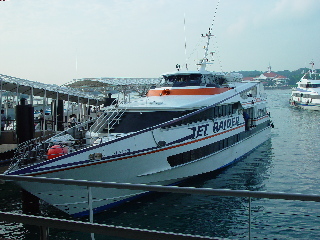
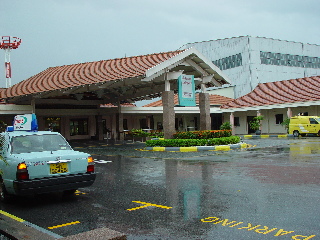
20 minutes in a taxi, an hour on a
boat, 30
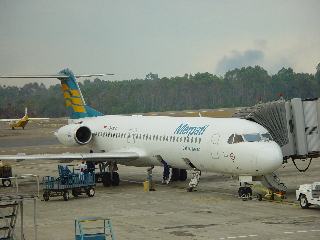
minutes in another taxi, 35 minutes on a
plane, 2
hours in a car for a total of 5 hours waiting and traveling. No it's not
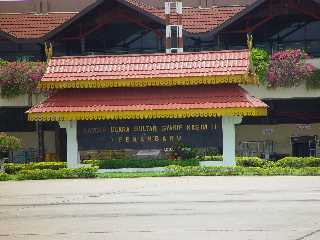
the journey to the farm. This time it's the trip to a client site in Kerinci, Sumatra via Batam and Pekan Baru. The return journey is a much
quicker in the
company plane: 30 minutes to the airstrip in a bus, a fifteen minute
hop on the plane to
Pekan Baru,
where we clear immigration and then an hour to
Seletar
airport in Singapore.
Here's a little known fact. When
Singapore and the US signed an open skies agreement, Singapore gained
the right to fly on to any destination in America. The US airlines
gained the right to fly on from Changi airport to any destination in
Singapore. In fact, there is only one other destination in Singapore:
Seletar airport abut 15km away. I think Singapore Airlines got the best
part of that deal.
The trip to Kerinci, apart from
being lengthy, went without any real hassles, except for one which was
self-induced. The ferry was a little late arriving in Batam and checking
my watch I saw we had only 15 minutes before take off. How long does it
take to get to the airport? 45 minutes. At that point I remembered
that Indonesian time was an hour behind Singapore. The tour guide, who
co-ordinated the transport, and driver exchanged a few words, which I
was assured meant that we still had no chance of making it.
Checking in at Batam airport
involved fighting through the standby passengers clogging up the sole
check-in desk. I immediately slipped into Indonesian/Philippine relaxed
mode. Don't worry, don't panic, don't let the thirty people who have not
grasped the fundamental principles of a queue bother you. Within 10
minutes we were checked in and heading for the plane.
Our seats were right at the back,
and looking out of the window, we had an excellent view of the left hand
engine, which completely blocked out anything else. Millie, my traveling
companion, was not at all reassured to be told that, "Well, if anything
does go wrong with the engine, we'll be the first to know."
Eventually we made it to Pekan Baru
and the Kijang was waiting to take us on to Kerinci. Two hours on the
road battling through the logging trucks demonstrated the advisability
of beaing able to read a newspaper in the car. Open the paper up, and
you can't see anything that's happening on the road.
At one point we were behind one
logging truck overtaking a second one dragging up a long steep hill. "No
worries, mate. If there is anything coming the other way, we're only
doing 5 miles an hour. It'll just be a small bump." Once again, I failed
to reassure Millie.
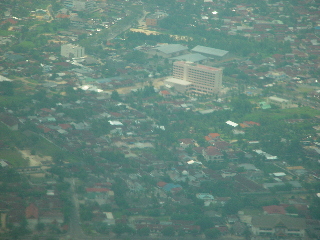
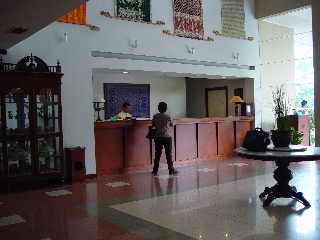
Still, we did make it safely to the
Unigraha Hotel
in Kerinci, which proved to be very comfortable. The last couple of
rooms at one end of the hotel on the ground and first floors had been
turned into project rooms and my bedroom was just a few doors away. Of
course, living so work close to work has its disadvantages as well as
advantages.
Just opposite the hotel was a food
court which served perfectly acceptable spicy Indonesian food and even
more acceptable Bir Bintang, the local brew, which was comprehensively
sampled on the second night. This was a reward for successfully
completing the Treasury workshops. Actually, Millie did all the hard
work. I just answered, or failed to answer, the more difficult
questions.
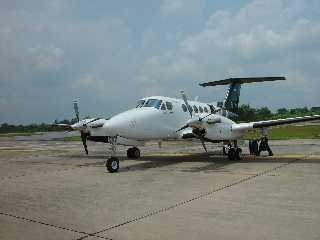
The return to Singapore in the
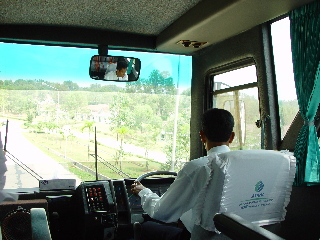
company plane was much more efficient. A
company bus
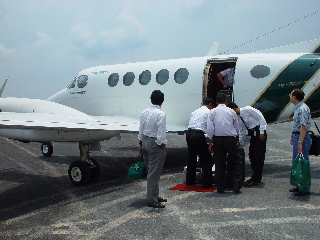
took us out to the airstrip, where the plane was waiting. This time we
were traveling in luxury on the larger of the two planes, a
Beechcraft 200
twin-prop, replete with leather seats. The flight was not full, so
we were not personally weighed and our luggage was not scrutinised.
After a stopover at
Pekan Baru to
clear immigration and customs, we re-boarded the plane for the final leg
to Seletar in Singapore. Generally, the flight was pretty smooth,
although the pilot did have to circle round some black thunderclouds,
and we definitely felt a few bumps as we moved in and out of the clouds.
So, overall a remarkably trouble
free trip to Kerinci. Of course, I don't have to do it every week.
March - Bangkok BoyZone
A quiet night out was the original
idea. A little spicy Thai food and then a stroll down to the night
market and maybe a quick drink in one of the nearby bars, Patpong I
think the area is called.
Jason, from our KL office, and I had
just survived a grilling at the client where we had presented a proposal
to assist them with the implementation of a new financial system. One
hour for the presentation and three solid hours of questions. Still it
showed they had read the proposal and were taking it seriously. "So
Lawrence, according to your CV, exactly how many Charts of Account has
your great-grandmother on your father's side designed," gives you a
flavour for the depth of interrogation.
Anyway, one of our local colleagues
had recommended a place called Anna's Cafe, not too far from the hotel.
The taxi driver was all very confident when he left, the hotel doorman's
directions ringing in his ear. A few minutes later and it was a
different story. "What's it called?" "What street is it in?"
We drove around aimlessly for a few
blocks and then he pulled up outside a bar on a very dark and quiet side
street. The minder outside came over to the taxi, looked inside and saw
two male farangs (Thai for foreigner) sitting in the back seat. He got
all excited and rushed to open the door of the bar, so we could look
inside.
At this point, we noticed the name
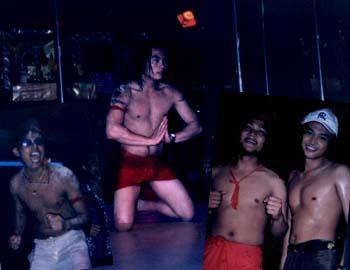
of the bar...BoyZone.
This was getting seriously out of
hand. Fortunately, the taxi driver took control, called the minder over,
told him the the farangs weren't cruisin', and asked for Anna's
Cafe, which turned out to be a couple of hundred yards from the hotel.
Just as well the food was good.
After all the pre-dinner excitement, we both agreed to save Patpong
for another occasion and retired to the hotel for an early night.